Idea board
Candidate builds for future projects and videos, ranked and sorted from most achievable to most ambitious. The goal is learning step by step — see the skill tree for how these builds connect into prerequisite chains across electronics, fabrication, control, AI, and benchtop manufacturing.
Each entry records primary-source specs, material class, reported BOM or kit cost, hardware tradeoffs, and fit against the maker research patterns.
At a glance
| # | Project | Tier | Space | Reported cost | What it teaches |
|---|---|---|---|---|---|
| 1 | Reachy Mini | 1 · Plug-in / sim | Desk | Kit / free sim | Agent loops & MuJoCo sim before buying parts |
| 2 | RookiDroid Mochi | 1 · Weekend | Desk | ~$155–$220 BOM | 18-DOF gaits & 50 Hz Wi-Fi UDP streaming |
| 3 | Amazing Hand | 1 · Weekend | Desk | <€200 BOM | Serial bus servos & cable-free parallel linkages |
| 4 | Feeders, conveyors & Botrail | 1–2 · Modular | Desk | Low BOM / OSS | Bulk part orienting, mini belts & cells-as-code |
| 5 | Aero Hand Open | 2 · Multi-weekend | Desk | $314 kit | Tendon routing, tensioning & ROS 2 teleop |
| 6 | LeKiwi | 2 · Multi-weekend | Desk | $482–$499 BOM | Holonomic mobile base + LeRobot imitation policies |
| 7 | Open Duck Mini v2 | 2 · Multi-weekend | Desk | <$400 BOM | Sim-to-real RL walking (MuJoCo → Pi Zero 2 W) |
| 8 | reBot-DevArm B601 | 3 · Benchtop metal | Desk / Garage | ~$1,000 budget | Ordered sheet-metal fab & CAN brushless QDD arms |
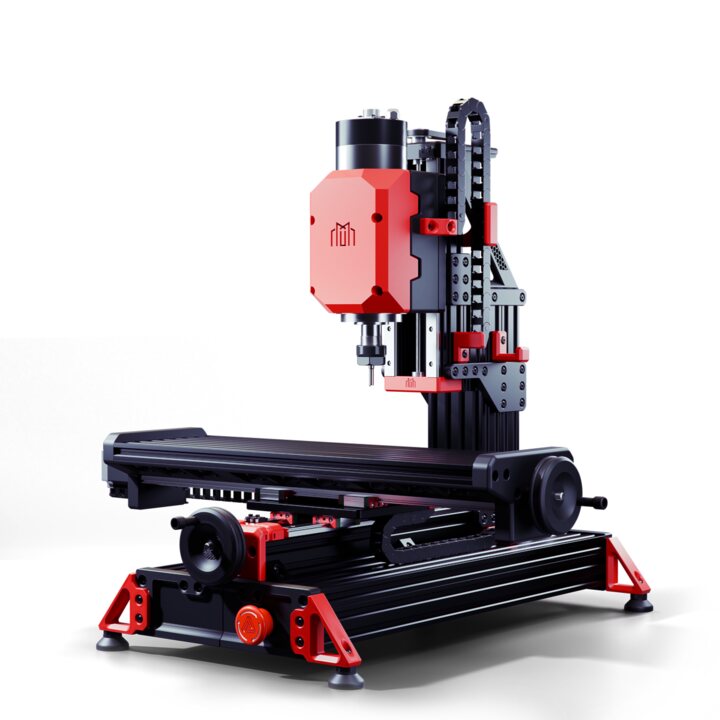
| 9 | Millennium Machines Milo v1.5 | 3 · Shop machine | Garage | $800–$1,500 | CNC assembly, tramming, CAM & cutting aluminum |
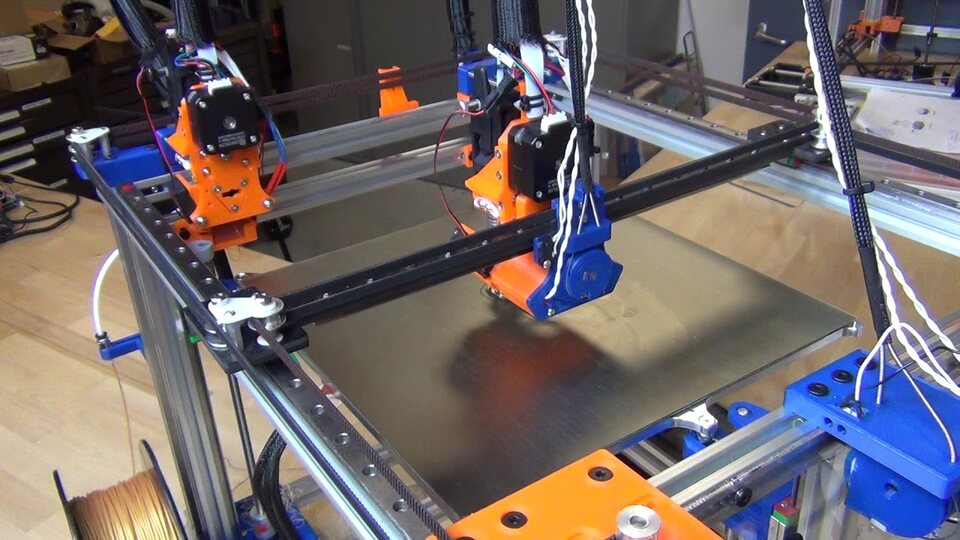
| 10 | Jubilee3D | 3 · Shop machine | Garage / Flex | ~$1,350 base BOM | CoreXY & kinematic automatic toolchanging |
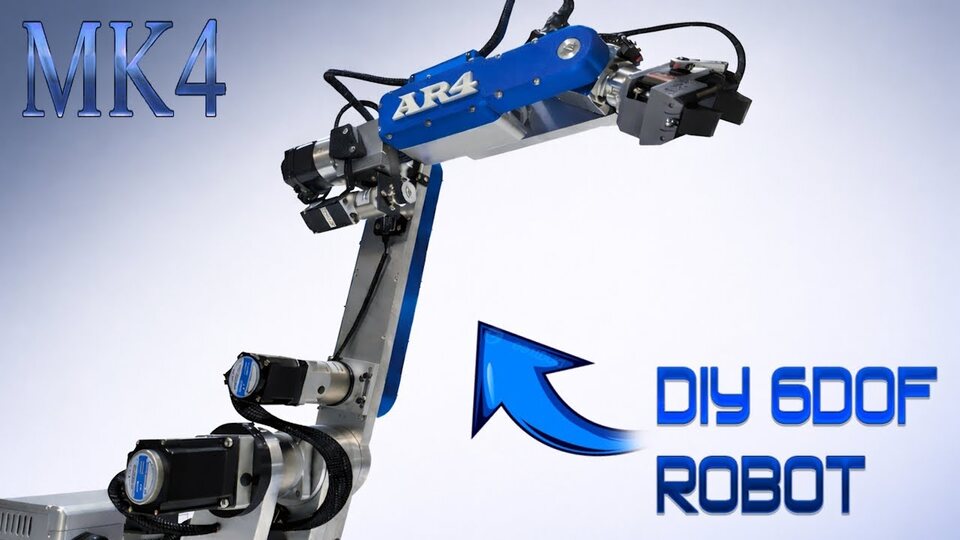
| 11 | Annin Robotics AR4 | 3 · Benchtop metal | Garage / Flex | ~$2,000 all-in | Industrial 6-DOF tending, Modbus PLC I/O & vision |
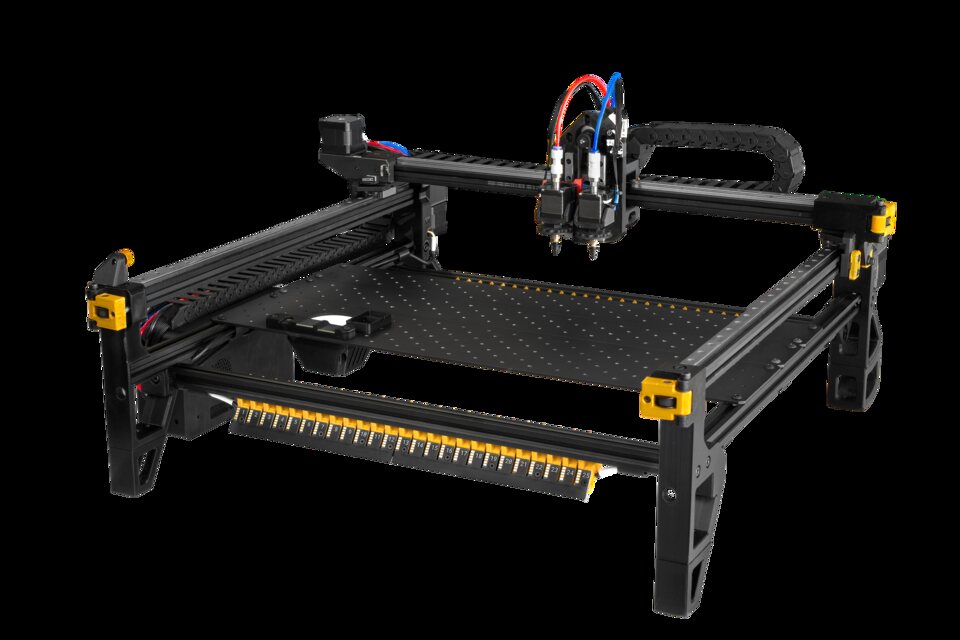
| 12 | Opulo LumenPnP v4 + OpenPnP | 3 · Production cell | Garage | $1,995 base | Vision-guided SMT pick-and-place & smart feeders |
| 13 | Buster Beagle 3D MK4 | 3 · Shop machine | Garage | DIY + machined parts | Automated pneumatic molding & two-part mold design |
| 14 | Betta-Wire V1.0 + Powercore | 4 · Deep process | Garage | DIY / kit (TBD) | 4-axis wire EDM physics, dielectric & pulse power |
| 15 | Berkeley Humanoid Lite | 4 · Multi-month | Garage / Flex | <$5,000 BOM | Custom cycloidal gearboxes & whole-body RL |
| 16 | OpenArm | 4 · Flagship metal | Flex (6k sf) | $6,500 bimanual | Contact-rich bimanual physical AI & data collection |
| 17 | MEVIUS2 | 4 · Flagship metal | Flex (6k sf) | Parts via Meviy/Misumi | Welded metal quadruped, Livox LiDAR & locomotion |
| 18 | mjbots quad A1 + moteus | 4 · Deep custom | Flex (6k sf) | Custom BOM | Open-source STM32 CAN-FD FOC & dynamic jumping |
Reachy Mini — desktop AI companion
Status: Tier 1 · Plug-in / sim · Evaluating · Kit / sim · Evaluated Nov 26, 2026

Watch on YouTube · Pollen Robotics demo (2:39)
An open-source, expressive desktop robot by Pollen Robotics built for AI builders, shipping in Wireless (Raspberry Pi CM4 + battery + Wi-Fi), USB Lite, and zero-hardware MuJoCo simulation modes.
- Sources: pollen-robotics/reachy_mini (Apache-2.0, 1,691 stars, 357 forks, active Nov 26, 2026) and Reachy Mini docs.
- Why it ranks #1 on achievability: Lowest hardware friction on the board — you can install the SDK and test interactive agent apps in MuJoCo on day one without printing a single part, then drop onto physical hardware when ready. Compare the character-robot appeal of Will CogleyA.
- Tradeoffs: More of a software/agent-app platform than a raw scratch fabrication build (less workshop machining/printing story than PAROL6, Mochi, or Open Duck Mini).
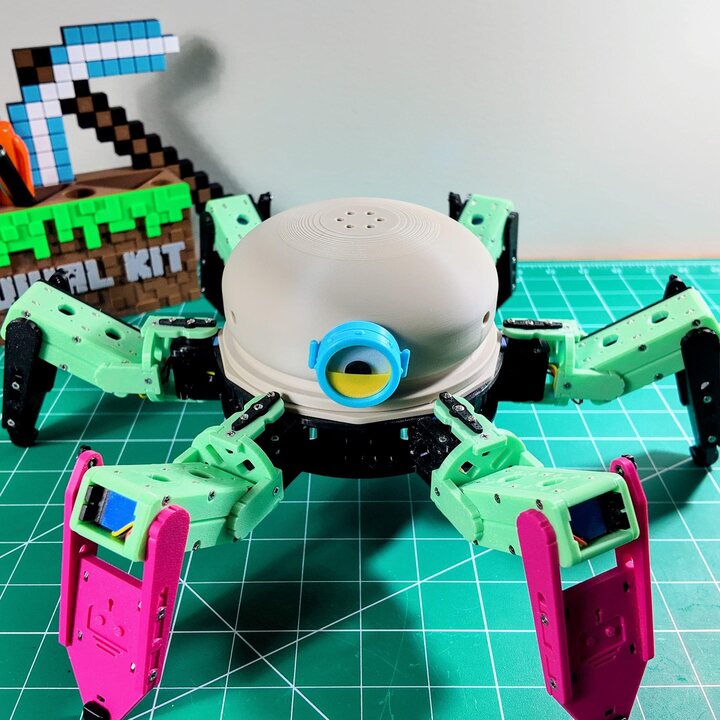
RookiDroid Mochi — 18-DOF Wi-Fi hexapod
Status: Tier 1 · Weekend · Shortlisted · 3D-printed · Evaluated Nov 26, 2026
Watch on YouTube · RookiDroid demo (0:19)
An open-source, 3D-printed 18-servo walking robot running on an ESP32 with browser-based servo calibration, OTA firmware updates, and 50 Hz real-time pose streaming over Wi-Fi UDP. Surfaced via Praveen Kumar Verma on X.
- Sources: rookidroid/hexapod (GPL-3.0, 172 stars,
v3.2.0, active as of Nov 26, 2026), rookidroid/hexapod-link (MIT desktop 3D simulator & pose sequencer, active Nov 25, 2026), Mochi build guide, and rookidroid.com.
Sibling comparison
All three frames share the same ESP32 firmware, Python gait generator (software/path_tool/), and hexapod-link desktop app:
| Model | Servos (18×) | Leg links (coxa / femur / tibia) | Battery | Controller board (shop) |
|---|---|---|---|---|
| Mochi | MG92B micro (180°) | 36 / 44 / 85 mm | 2 × 18650 (2S) | $45.99–$55.99 |
| Nougat | 21G digital (180°) | 38 / 54 / 97 mm | 2 × 18650 (2S1P) | $45.99–$55.99 |
| Macaroon | 25 kg digital (8.4 V) | 62 / 76 / 132 mm | 4 × 18650 (2S2P) | $35.99–$45.99 |
Mochi BOM and build scope
Estimated total: $155–$220 with RookiDroid’s pre-assembled carrier board (less with a generic ESP32, dual PCA9685 breakouts, and a high-current buck converter). Reported build time is 8–12 hours including printing, assembly, and calibration.
- Actuators: 18 × TowerPro MG92B metal-gear micro servos (~$70–$100; buy from one batch for matching centering and deadband).
- Control & power: ESP32 + dual PCA9685 PWM drivers (
0x40/0x41), 2 × protected 18650 Li-ion cells (2000 mAh+), 2S battery holder, 12 mm SPST toggle switch (~$56–$71 with the plug-in carrier board; no soldering required). - Hardware: 36 × M2×6 hex socket screws, 180 × M2×12 countersunk screws, 216 × M2 hex nuts, 18 × M4×6 stainless pins, 18 × MR74-2RS bearings (~$10–$20).
- 3D printing: Free STLs plus a ready-to-print Bambu Studio project (
hexapod_mochi.3mf), 0.2 mm layers, 20–30% infill in PLA or PETG with TPU foot tips (~1–1.5 spools, $20–$30).
What makes it strong
- Clean 50 Hz host-streaming protocol: Port
1234accepts a 44-byte binary UDP packet (0xA6) carrying raw ticks (int16[6][3], ~0.44°/tick) for all 18 joints, with on-board per-joint slew limiting, reorder filtering, and a 1 s failsafe back to standby. A laptop, vision loop, or AI agent can drive custom poses live over Wi-Fi without touching firmware. - Low-friction bring-up: Joins 2.4 GHz Wi-Fi (or falls back to its own AP at
192.168.4.1), serves a browser drive and calibration UI that persists ±100-tick offsets to NVS flash, and supports Wi-Fi OTA updates. - Fast contrast to PAROL6: Ships with a Bambu
.3mfand plug-in carrier board for a weekend-scale build instead of a multi-week shop project.hexapod-linkalso runs without hardware (Linux AppImage/deb and Windows) to test kinematics first. - Strong video pattern fit: Maps directly onto a concrete promise in the title (“$200 18-servo hexapod”), AI and hardware (offboard model or vision streaming 50 Hz poses to a six-legged walker), and few videos, high craft.
Tradeoffs and risks
- Open-loop PWM servos only: PCA9685 + MG92B gives no joint-angle readout, current/torque feedback, or foot-contact sensing. Closed-loop proprioceptive RL or terrain compliance is out unless you add external sensors (IMU, foot switches, or an offboard camera).
- Tiny payload headroom: MG92B micro servos are sized for desktop agility, not carrying an onboard SBC and camera. Keep compute offboard over Wi-Fi on Mochi, or step up to Macaroon (25 kg servos, 4 × 18650) if onboard compute matters.
- Small-fastener assembly tedium: 216 M2 nuts and 180 M2×12 screws across six mirrored/standard leg assemblies, plus servo-horn alignment during calibration.
- Small maintainer footprint: Active development (commits Nov 2026) and thorough docs, but a small community (172 stars on
hexapod, 2 onhexapod-link) and shop shipping lead time if ordering the official carrier board.
Verdict
Shortlist for a fast offboard-AI build. Test hexapod-link locally first; if the streaming workflow clicks, Mochi is an inexpensive, high-visual-payoff weekend build for driving 18-DOF hardware from a host model over UDP. Pick Macaroon instead only if the build needs to carry onboard compute or cameras.
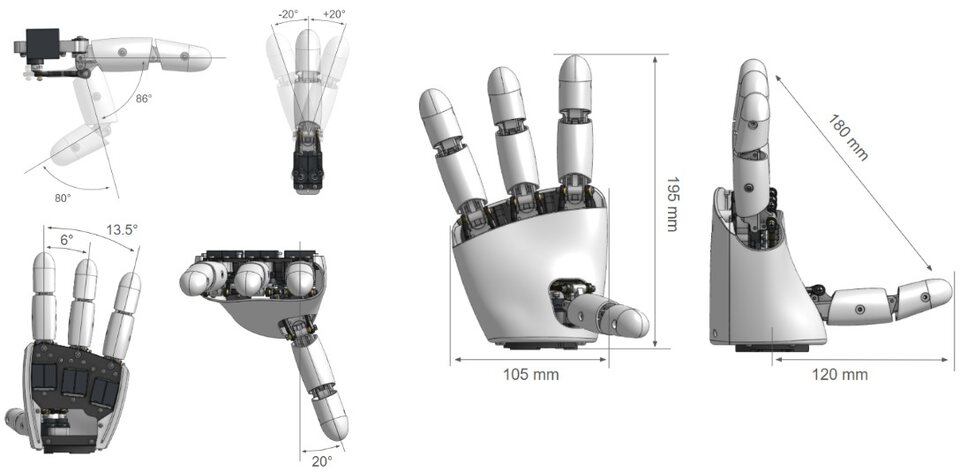
Amazing Hand — cable-free 8-DOF hand
Status: Tier 1 · Weekend · Shortlisted · 3D-printed · Evaluated Nov 26, 2026
Watch on YouTube · Steve N’Guyen demo (0:29)
An open-source, 3D-printed 4-finger, 8-DOF humanoid hand (~400 g) by Pollen Robotics where all actuators live inside the hand with zero external tendons or forearm bulk.
- Sources: pollen-robotics/AmazingHand (Apache-2.0 code + CC-BY-4.0 mechanical design, 2,578 stars, 306 forks, last push Apr 23, 2026), including the
Amazing-Hand-Enhancedbranch. - Cost & stack: Reported BOM under €200. Each finger uses 2 × internal Feetech SCS0009 serial bus servos in a parallel mechanism (flexion/extension + abduction/adduction) with flexible 3D-printed shells, driven via a Waveshare serial bus adapter + Python or Arduino.
- Why it stands out: Eliminates tendon stringing and tension drift while staying light enough (400 g) to adapt onto a desktop arm — a direct end-effector upgrade path for PAROL6 or an SO-101, and a crisp concrete promise build (compare Mahdi DesignsA’s $300 robot hand).
- Tradeoffs: Four fingers instead of five and lower grasp force than tendon-driven forearms; wrist mount ships for Reachy 2’s Orbita 3D and needs a printed adapter plate for other arms.
Vibratory feeders, mini conveyors & Botrail — transport and cell control
Status: Tier 1–2 · Modular · Shortlisted · 3D-printed + extrusion + Rust/Python cell studio · Evaluated Nov 26, 2026
Watch on YouTube · Fraens Engineering vibratory bowl feeder build (12:50)
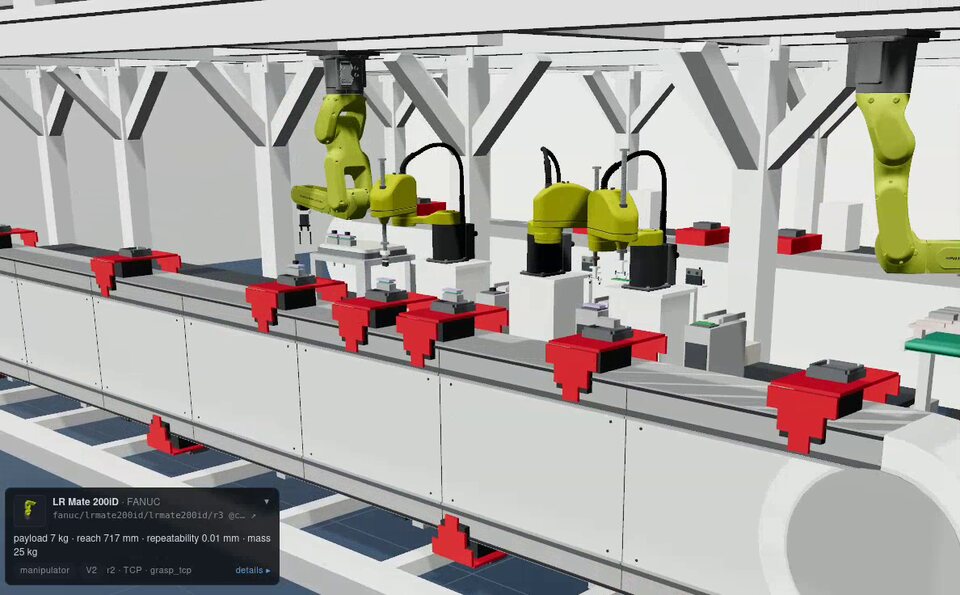
Modular scale-model-manufacturing building blocks you can learn one piece at a time and attach straight to PAROL6: bulk part orienting (vibratory bowl feeders), station-to-station transport (benchtop conveyors), and deterministic multi-robot cell simulation.
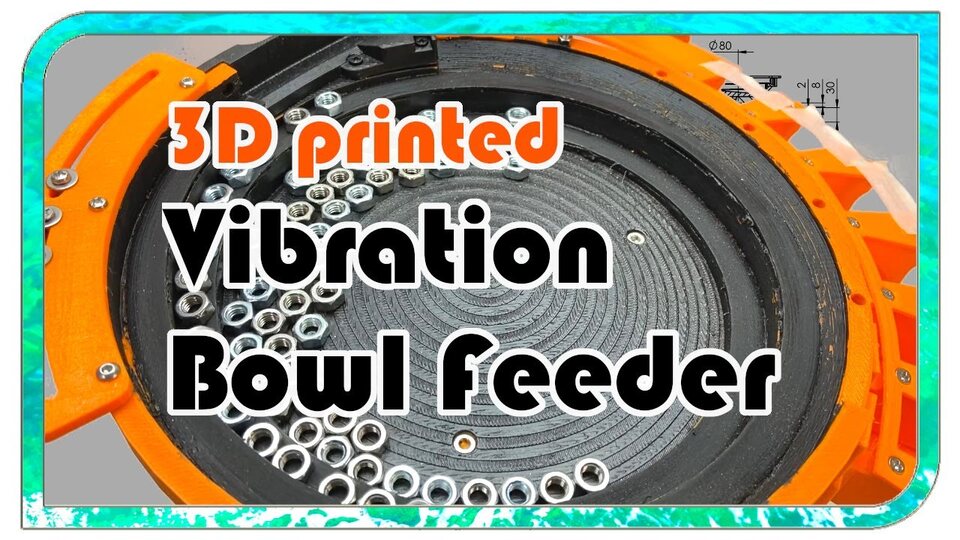
- Vibratory bowl feeding: Fraens Engineering’s 3D-printed vibratory bowl feeder uses tuned printed leaf springs, an electromagnet, and Arduino sine-wave drive to singulate and orient loose nuts, screws, or small parts into a repeatable pickup nest — replacing $3K–$15K industrial bowls on a hobby budget.
- Open-source mini conveyor: KAIKAKU-AI/conveyor-belt (MIT, 49 stars) publishes a full Onshape desktop conveyor belt designed specifically because commercial micro-conveyors start in the thousands; pair with beam-break sensors and an overhead webcam for tracked belt picks.
- Robot cells as code: botrail/botrail (PolyForm Small Business / Noncommercial, pushed Nov 24, 2026, live browser demo) lets you define arms, conveyors, beam sensors, linear shuttles, and PLC sequences in Python/JSON on a Rust core (
pip install botrail— no ROS or GPU required) with bit-identical deterministic timelines you can regression-test in CI before wiring hardware. - Why it ranks early: You can spin up
botrailin ten minutes, print a single bowl feeder or mini belt over a weekend, and immediately turn an arm demo into a repeatable mini assembly cell (series arc). - Tradeoffs: Bowl feeder geometry is part-specific and fussy to tune for jam-free throughput;
KAIKAKU-AI/conveyor-beltis archived (v0.1.0) as a CAD starting point rather than a turnkey kit;botrailis very young (46 stars) and uses a source-available PolyForm license rather than MIT/Apache.
Aero Hand Open — tendon-driven 5-finger hand
Status: Tier 2 · Multi-weekend · Evaluating · 3D-printed · Evaluated Nov 26, 2026
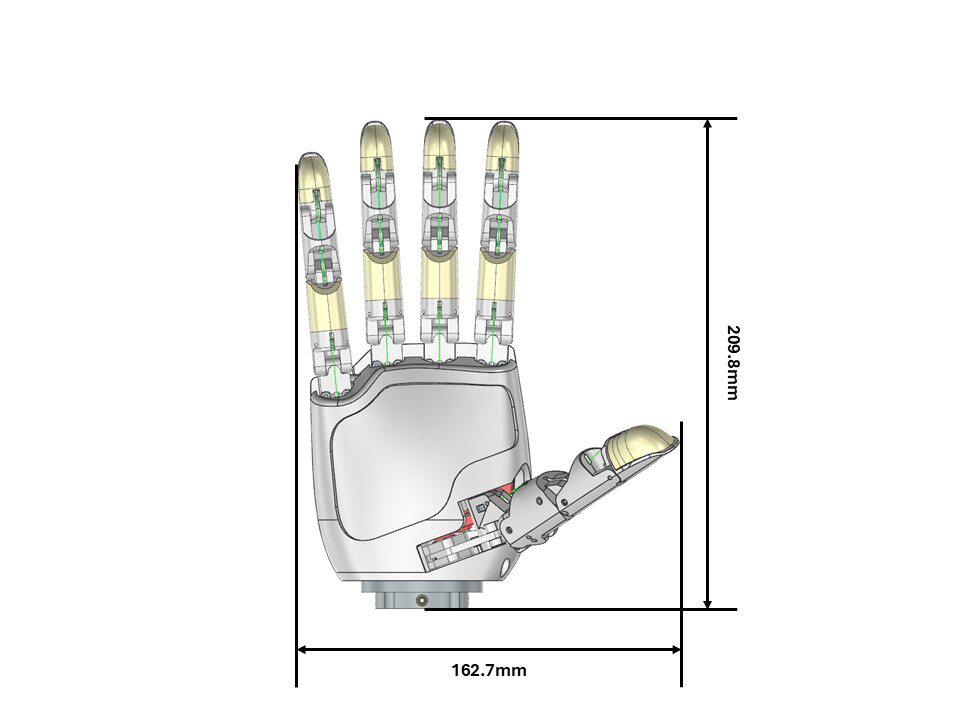
Watch on YouTube · Chestnut Robotics overview (2:13)
A 7-DOF, 16-joint, 5-finger tendon-driven 3D-printed hand (389 g) by Chestnut Robotics (formerly TetherIA) designed for dexterous manipulation and RL research.
- Sources: Chestnut-Robotics/aero-hand-open (1,121 stars, last push Sep 15, 2026), arXiv:2608.28578, and project docs.
- Cost & stack: Complete kit listed at $314 USD (with full CSV BOM, STEP/print files, and PCB design in the repo). Runs on ESP32 with an independent Python SDK, ROS 2 teleoperation, and RL simulation assets.
- Why it stands out: Natural 5-finger anthropomorphic silhouette with full sim/RL tooling at a fraction of research-hand prices — pairs cleanly against Amazing Hand as a direct “parallel-linkage vs. tendon-driven” comparison build.
- Tradeoffs: Tendon routing and re-tensioning add mechanical upkeep compared to cable-free linkages, and the repo uses a custom license (
NOASSERTIONon GitHub — check the repo’s license section before derivative redistribution).
LeKiwi — holonomic mobile manipulator
Status: Tier 2 · Multi-weekend · Evaluating · 3D-printed · Evaluated Nov 26, 2026
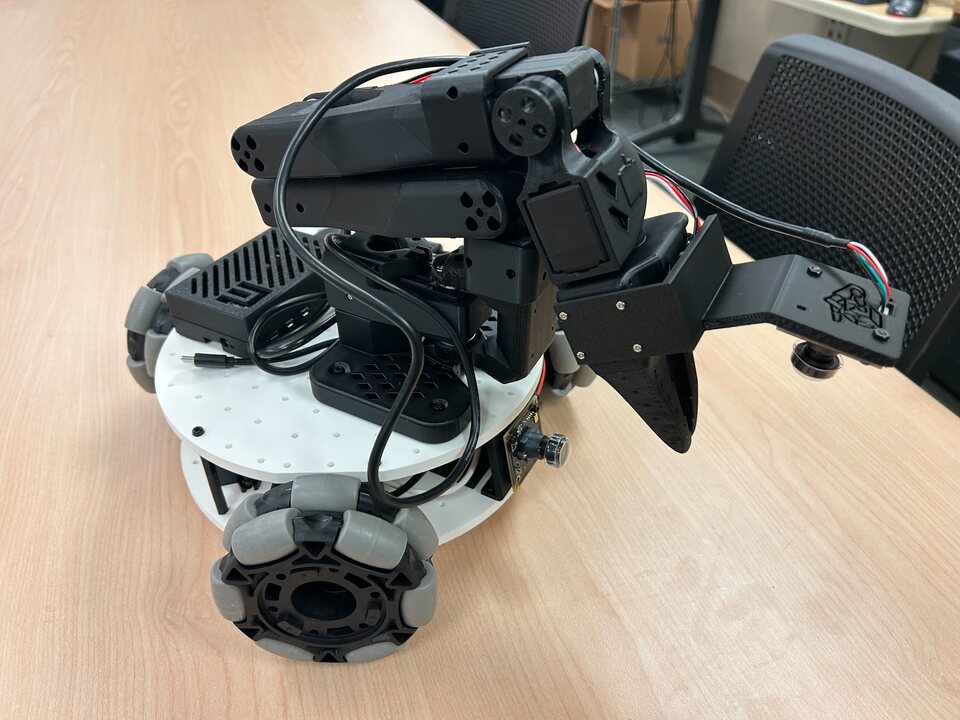
Watch on YouTube · Full build, teleoperation & policy walkthrough (55:37)
A low-cost, 3D-printed 3-wheel omni-drive mobile base carrying an SO-ARM101 arm (8,227 stars, Apache-2.0), a Raspberry Pi 5, and workspace + wrist RGB cameras, built natively for Hugging Face LeRobot.
- Sources: SIGRobotics-UIUC/LeKiwi (Apache-2.0, 1,526 stars, 170 forks, last push Aug 5, 2026), BOM, and LeRobot LeKiwi docs.
- Cost & options: Documented US BOM is $482 (12V Li-ion, heavier lift) or $499 (5V 65W power bank, easier assembly); base-only is $248–$251.50 (or $184 wired). Standardized 20 mm-grid stacked plates simplify adding sensors or compute.
- Why it stands out: Turns table-bound imitation learning into a roaming house/shop manipulator without a multi-thousand-dollar base, directly matching the LeRobot/SO-101 wave seen on Back to EngineeringB and Brogan M. PrattA.
- Tradeoffs: Omni wheels need smooth indoor floors (no thresholds or shop debris), and full autonomy depends on streaming to a host laptop or GPU box for policy inference.
Open Duck Mini v2 — BDX-inspired biped
Status: Tier 2 · Multi-weekend · Shortlisted · 3D-printed · Evaluated Nov 26, 2026
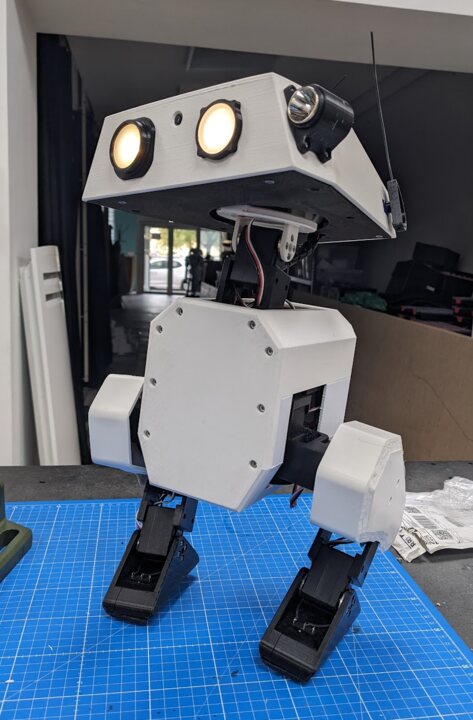
Watch on YouTube · Open Duck Mini v2 talk & demo (42:59)
A 42 cm tall, 3D-printed bipedal droid inspired by Disney’s BDX, running sim-to-real reinforcement-learning walking policies (ONNX) onboard a Raspberry Pi Zero 2 W.
- Sources: apirrone/Open_Duck_Mini (Apache-2.0, 4,795 stars, 626 forks, last push Jan 31, 2026), Open_Duck_Mini_Runtime, Open_Duck_Playground (MuJoCo Playground RL training), and the community Tnkr build guide.
- Cost & stack: Target full BOM reported under $400. Sponsored by Hugging Face and Pollen Robotics; uses serial bus servos, Onshape CAD, and pre-trained ONNX policies you can test in MuJoCo before ordering parts.
- Why it stands out: Real sim-to-real RL walking on an expressive character robot — a huge visual step beyond LUT-driven walkers like Mochi, and a natural fit for AI and hardware plus learning in public.
- Tradeoffs: The repo openly describes itself as a working research hub with undocumented scripts and an incomplete native assembly guide (relying on Discord and community guides like Tnkr), and expression peripherals (eye LEDs, camera, speaker, mic) were still trailing the mechanical walking core.
reBot-DevArm B601 — sheet-metal brushless arm
Status: Tier 3 · Benchtop metal · Shortlisted · Sheet metal + 3D-printed hybrid · Evaluated Nov 26, 2026
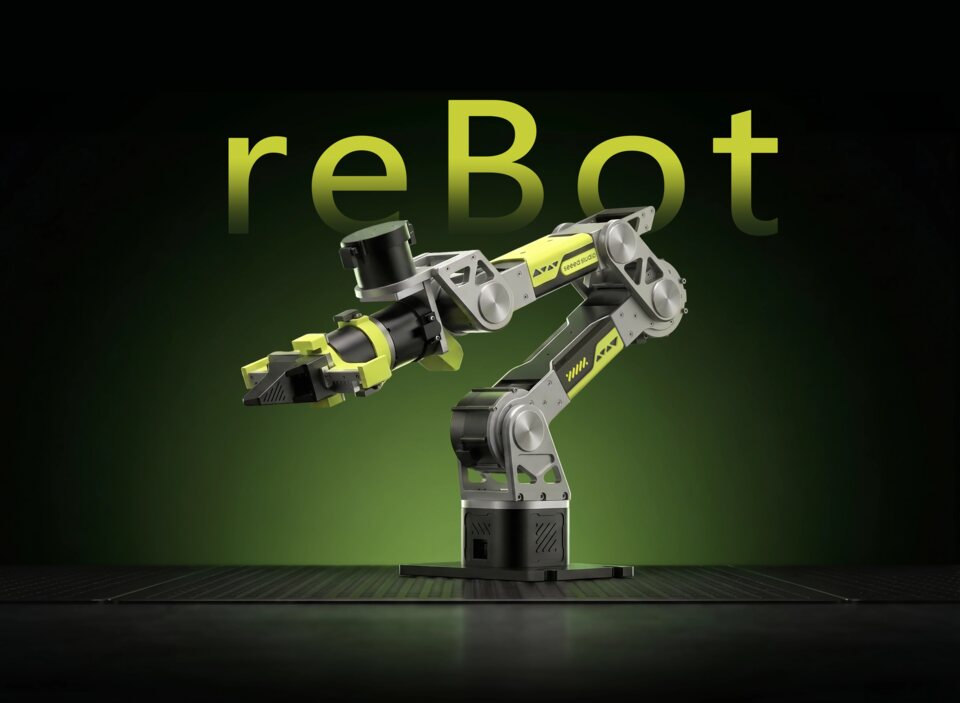
Watch on YouTube · Seeed AI Robotics Lab overview (5:52)
An OSHWA-certified open-source brushless arm combining sheet-metal structural parts with 3D-printed components, offered in B601-DM (Damiao) and B601-RS (RobStride) actuator variants — plus a newer bimanual torso platform (reBot-Arm-T701).
- Sources: Seeed-Projects/reBot-DevArm (CERN-OHL-W-2.0 hardware + Apache-2.0 software, 4,833 stars, 512 forks, pushed Nov 26, 2026) and Seeed Robotics Wiki.
- Cost & stack: Targeted around a $1,000 budget for a brushless QDD arm; includes sheet-metal and printed CAD blueprints, screw-level BOM, Python SDK, ROS 1/2, Isaac Sim, and LeRobot support (already featured on Back to EngineeringB).
- Why it stands out: The easiest on-ramp into real metal robotics and brushless QDD torque — bridging plastic servo arms (PAROL6, SO-101) and $6.5K all-metal rigs like OpenArm, with CERN open hardware licensing.
- Tradeoffs: Sheet-metal parts require ordering laser-cut/bent metal (e.g. SendCutSend/JLCPCB/local fab) rather than pure home printing, and CAN-bus brushless tuning has a steeper setup curve than UART serial servos.
Millennium Machines Milo v1.5 — desktop CNC mill
Status: Tier 3 · Shop machine · Shortlisted · Machined aluminum + extrusion + linear rails · Evaluated Nov 26, 2026
Watch on YouTube · Milo v1.5 showcase (9:09) · Also see PrintNC true cost breakdown for a larger welded-steel DIY CNC alternative
An open-source benchtop CNC mill designed specifically to cut aluminum (plus composites, wood, and plastics) using machined aluminum plates, extrusions, linear rails, and ballscrews — the shop machine that lets you machine metal parts, molds, and fixtures for your own robots.
- Sources: MillenniumMachines/Milo-v1.5 (GPL-3.0, 1,054 stars, 98 forks) and diycnc.xyz/docs.
- Cost & sibling option: Roughly $800–$1,000 self-sourced or $1,200–$1,500 as an LDO hardware kit. If you want a larger envelope and enough rigidity for heavy aluminum and light steel, PrintNC steps up to a welded/bolted square-steel tube frame with HGR linear rails and a 1.5–2.2 kW VFD spindle ($1,500–$3,000+ realistic all-in).
- Why it stands out: Classic “build the machine that builds the machines” shop arc — the exact pattern that broke out Sea 2 ShedS (24× subs on a scratch CNC mill build) and pairs with Practical MachinistB and Clough42A.
- Tradeoffs: Desktop work envelope on Milo (fine for robot brackets, actuator housings, molds, and end-effector plates, not large chassis frames); PrintNC demands much more floor space, wiring, and steel fab.
Jubilee3D — automatic toolchanging multi-process gantry
Status: Tier 3 · Shop machine · Shortlisted · Machined aluminum + extrusion + linear rails · Evaluated Nov 26, 2026
Watch on YouTube · Toolchanging walkthrough (4:44) · Also see Machine Agency 30 s overview
An open-source, extensible CoreXY automatic toolchanging gantry developed at the University of Washington’s Machine Agency, engineered to swap arbitrary non-loadbearing tools (dispensers, vacuum nozzles, cameras, grippers, probes, extruders) mid-job over a single kinematically coupled bed.
- Sources: machineagency/jubilee (630 stars, 126 forks, SolidWorks + STEP + assembly PDFs), machineagency/science-jubilee (MIT, Python control API, pushed Apr 23, 2026), and jubilee3d.com.
- Cost & specs: Roughly ~$1,350 base BOM (excluding custom tools) for a 300 × 300 × 300 mm work envelope, 409 mm horizontal tool-rack bar, E3D-compatible kinematic lock toolplates, 3-point auto-tramming bed, and Duet G-code / Python control.
- Why it stands out: Teaches CoreXY motion, kinematic coupling, and multi-process automation on one bed — pick a component with tool 1, dispense paste or glue with tool 2, inspect alignment with a camera on tool 3.
- Tradeoffs: Designed for non-loadbearing automation (not heavy milling forces); custom end-effector tools and calibration scripts still require DIY fabrication and tuning.
Annin Robotics AR4 — machined-aluminum 6-axis cell arm
Status: Tier 3 · Benchtop metal · Shortlisted · Machined aluminum + closed-loop steppers · Evaluated Nov 26, 2026
Watch on YouTube · Chris Annin AR4 MK4 overview (3:43) · Also see AR4-MK3 detailed build walkthrough
An industrial-style, machined-aluminum 6-DOF benchtop robot arm built specifically for repeatable shop tending — pick-and-place, conveyor sorting, machine tending, and vision-guided assembly cells.
- Sources: anninrobotics.com (free CAD/STEP, firmware, and Python control downloads) and ycheng517/ar4_ros_driver (MIT, 150 stars, ROS 2 Jazzy/Humble + MoveIt + Gazebo, pushed Apr 4, 2026).
- Cost & specs: Roughly $2,000 all-in (~$1,229 aluminum/hardware combo kit + ~$699–$760 StepperOnline closed-loop encoder stepper/driver bundle; optional servo gripper ~$75 or pneumatic gripper ~$139). ~629–675 mm reach, 1.9 kg (4.15 lb) payload, ±0.25 mm repeatability, Teensy 4.1 controller, native Modbus/TCP PLC I/O, OpenCV vision, Python API, and G-code support.
- Why it stands out: The natural metal step-up beside PAROL6: stiff aluminum plates, closed-loop encoders, pneumatic gripper option, and built-in Modbus/digital I/O so it talks straight to conveyors, vises, and benchtop machines like a real factory cell robot.
- Tradeoffs: Stepper/gearbox drivetrain is non-backdrivable (great for repeatable positioning and holding payloads, less suited for compliant human-contact RL than QDD arms like OpenArm or reBot-DevArm).
Opulo LumenPnP v4 + OpenPnP — desktop SMT pick-and-place
Status: Tier 3 · Production cell · Shortlisted · Aluminum extrusion + machined plates + printed brackets · Evaluated Nov 26, 2026
Watch on YouTube · Opulo v4.2 overview (3:18)
An open-source desktop surface-mount pick-and-place machine running OpenPnP, paired with motorized smart tape feeders, dual machine-vision cameras, and an enclosed vacuum pneumatic system built for real in-house small-batch PCB production.
- Sources: opulo-inc/lumenpnp (3,754 stars, 512 forks, pushed Oct 14, 2026), opulo-inc/feeder (205 stars, pushed Nov 23, 2026), openpnp/openpnp (GPL-3.0, 2,276 stars, pushed Nov 20, 2026), and opulo.io/products/lumenpnp.
- Cost & performance: Base machine lists at $1,995 (with turnkey feeder packages from ~$2,450 basic up to ~$7,990–$8,620 fully loaded; smart feeders ~$95 each, or self-built from the open feeder repo). Rated up to 1,580 CPH, placing 0402 passives, 0.4 mm fine-pitch ICs, and 0.5 mm BGAs across up to 50 × 8 mm feeder slots.
- Why it stands out: The benchmark desktop electronics-assembly station — teaches machine-vision calibration, fiducial alignment, vacuum handling, and real PCBA production workflows with active open tooling (
tray-gen,lumen-layout,viagrid). - Tradeoffs: Full SMT line still needs stencil printing and reflow (hot plate or desktop reflow oven), and feeder count is where costs climb quickly once a BOM spans dozens of unique reel values.
Buster Beagle 3D MK4 — automated desktop injection molder
Status: Tier 3 · Shop machine · Shortlisted · 304 stainless barrel + aluminum extrusion + pneumatics · Evaluated Nov 26, 2026
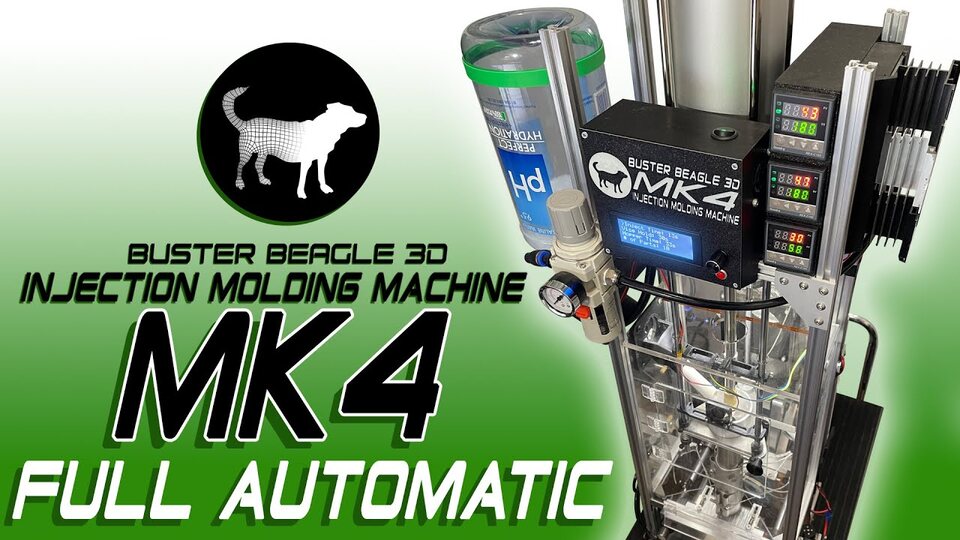
Watch on YouTube · Buster Beagle 3D MK4 full automatic demo (17:38)
A DIY benchtop pneumatic automated injection molding machine that upgrades manual lever molders with an Arduino-controlled injection/clamp cycle, custom PCB, stainless heated chamber, and pneumatic vise so a small shop can run repeatable thermoplastic parts unattended.
- Sources: BusterBeagle3D/MK4_Automation (CC0-1.0, pushed Jun 29, 2026, includes
MK4-PCB-Boardfiles) and busterbeagle3d.com. - Specs & stack: 304 stainless steel heated chamber (3 cu. in. standard, expandable to 5 cu. in.) with removable threaded nozzle and brass plunger, band heaters up to 300 °C, pneumatic cylinders (SC63 ~600–700 lbf or SC100 up to ~1,500 lbf), SSR + PID temperature control, and Arduino cycle sequencing.
- Why it stands out: Bridges the gap between slow 3D printing and real manufacturing — mill an aluminum two-part mold on Milo v1.5 (or print high-temp resin prototype molds), shoot dozens of identical PP/HDPE/ABS parts per hour, and learn draft angles, venting, gating, and cycle automation.
- Tradeoffs: Needs a shop air compressor, careful thermal/pressure safety guarding, and mold design discipline — plus BOM/STLs live across GitHub, Google Drive, and the storefront rather than one self-contained repo.
Rack Robotics Betta-Wire V1.0 + Powercore — desktop 4-axis wire EDM
Status: Tier 4 · Deep process · Shortlisted · 3D-printed + metal motion hardware + RP2040 EDM PSU · Evaluated Nov 26, 2026
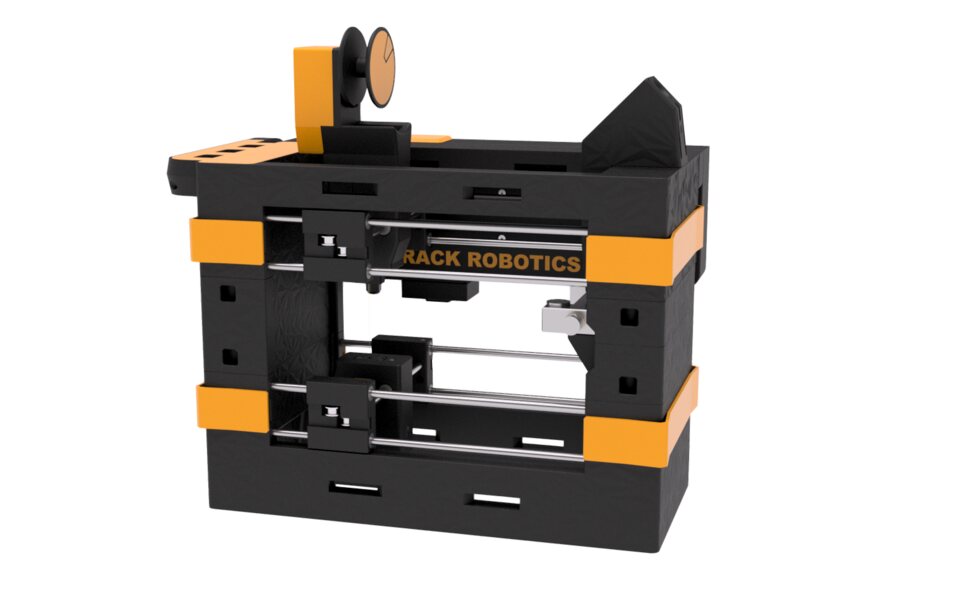
Watch on YouTube · Rack Robotics Powercore overview (1:32) · Also see Morlock’s 3D-printed 4-axis wire EDM build
An open-source 4-axis (X, Y, U, V) desktop electrical-discharge machining system that cuts steel, hardened tool steel, aluminum, and titanium using a thin brass wire and dielectric bath instead of spindle cutting forces.
- Sources: Rack-Robotics/Betta-Wire-V1.0 (CC-BY-NC-4.0, 136 stars, pushed Nov 18, 2025), Rack-Robotics/Powercore-V3 (88 stars, pushed Sep 30, 2025), Rack-Robotics/Powercore-V2.0 (260 stars), and community sibling OpenEDM/OpenEDM-wire-machine + OpenEDM-arc-generator (pushed Nov 15, 2026).
- Specs & stack: 100 × 200 mm cutting envelope, independent upper/lower guides for tapered 4-axis cuts, Klipper motion firmware, KiCAD + RP2040 open-source EDM pulse generator (
Powercore-V3), and EDMWeb (AGPL-3.0) CAM. - Why it stands out: Zero cutting force lets a lightweight desktop frame slice hardened steel gears, flexure linkages, punch dies, and tight internal corners that a small CNC mill like Milo cannot touch. High few videos, high craft and concrete promise potential.
- Tradeoffs: Slow material removal compared to milling, dielectric water filtration/deionization housekeeping, wire-break tuning, and non-commercial CC-BY-NC-4.0 licensing on
Betta-Wire-V1.0.
Berkeley Humanoid Lite — sub-$5K humanoid
Status: Tier 4 · Multi-month · Evaluating · Metal + 3D-printed hybrid · Evaluated Nov 26, 2026

Watch on YouTube · Hybrid Robotics official demo (2:40)
An open-source, sub-$5,000 humanoid platform combining modular custom gearboxes, off-the-shelf structural hardware, Onshape CAD, and an Isaac Lab / MuJoCo sim-to-real stack for whole-body locomotion and teleoperated manipulation.
- Sources: HybridRobotics/Berkeley-Humanoid-Lite (MIT code + CC-BY-SA-4.0 hardware, 2,043 stars, pushed Mar 10, 2026), arXiv:2504.17249, and docs.
- Cost & stack: Target BOM under $5,000; full URDF/MJCF/USD export from Onshape, Isaac Lab policy training, sim2sim verification, and real-world low-level deployment code.
- Why it stands out: Full bipedal humanoid + upper-body manipulation with real academic sim-to-real recipes, and strong headline hook (concrete promise: “sub-$5,000 open-source humanoid”).
- Tradeoffs: High actuator/gearbox build count and wear on printed cycloidal gearboxes under repeated falls (newer community branches are moving toward commercial RobStride actuators).
OpenArm — full-metal 7-DOF bimanual arm
Status: Tier 4 · Flagship metal · Shortlisted · Full metal (aluminum + stainless steel) · Evaluated Nov 26, 2026
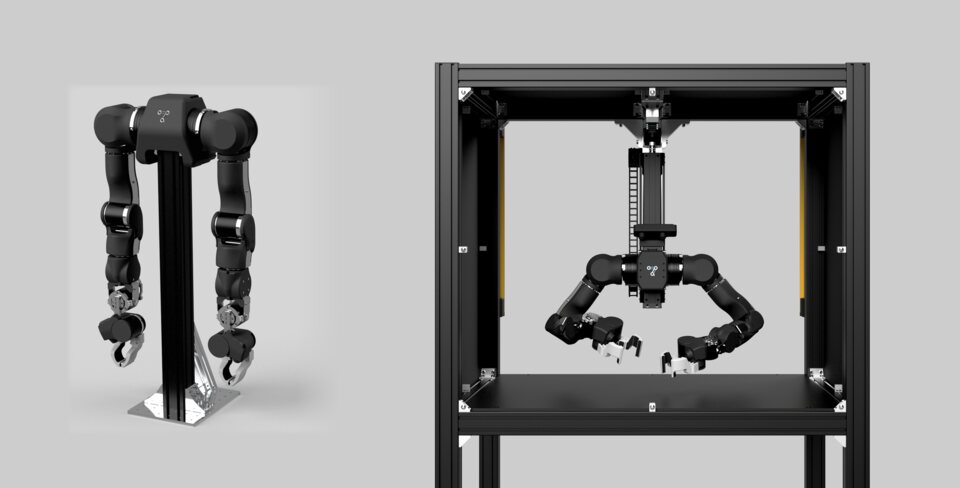
Watch on YouTube · Enactic official launch video (1:22)
A human-scale, backdrivable 7-DOF humanoid arm built from aluminum and stainless steel for contact-rich physical AI research, teleoperation, and repeatable data collection.
- Sources: enactic/openarm (Apache-2.0, 3,727 stars, 405 forks, pushed Nov 25, 2026), openarm.dev, and docs.openarm.dev.
- Cost & stack: $6,500 USD for a complete bimanual system (available DIY or via certified manufacturers), pairing machined aluminum/stainless structure with compliant QDD brushless actuators and a standardized lighting/camera evaluation cell.
- Why it stands out: True metal industrial-feel alternative to plastic LeRobot arms — built to survive real contact tasks without flex or stripped gears, with active backing and clean docs. Strong fit for AI and hardware and a series arc with stakes.
- Tradeoffs: Serious budget jump ($6.5K bimanual) and heavier mounting/safety discipline than desktop hobby arms.
MEVIUS2 — welded sheet-metal quadruped
Status: Tier 4 · Flagship metal · Shortlisted · Full metal (welded sheet metal + CNC) · Evaluated Nov 26, 2026
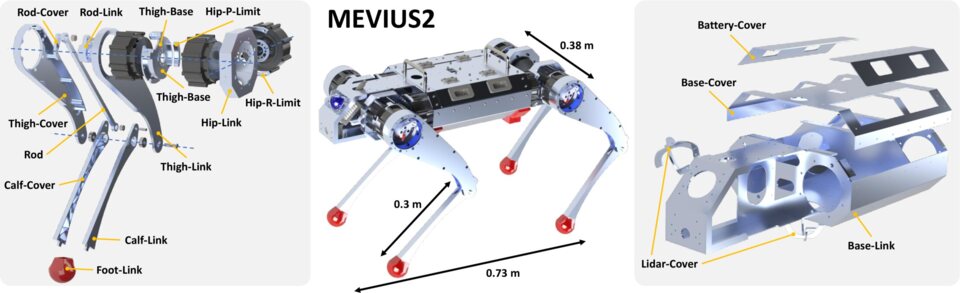
Watch on YouTube · JSK / EVARL / Kento Kawaharazuka demo (3:42)
A Spot-sized, open-source quadruped intentionally engineered around sheet-metal welding and CNC machining instead of fragile 3D-printed legs, designed so every metal part can be quoted and ordered straight from STEP files through e-commerce fab houses (Misumi/Meviy).
- Sources: haraduka/mevius2 (MIT, 187 stars, pushed Mar 24, 2026), MEVIUS2 project page, arXiv:2603.22031, and original haraduka/mevius (262 stars).
- Actuators & stack: 12 × RobStride03 QDD brushless actuators over CAN, Livox LiDAR + FAST-LIO odometry + CuPy elevation mapping, IsaacGym (
legged_gym) RL training, MuJoCo sim, and ROS. - Why it stands out: Solves the #1 failure mode of DIY robot dogs (snapping printed legs on real ground) while showing how a small shop can fabricate or order industrial-grade welded metal hardware. Killer multi-episode series arc + AI and hardware build.
- Tradeoffs: Multi-thousand-dollar build once you tally 12× RobStride03 motors, Livox LiDAR, and sheet-metal welding/machining; software stack leans on ROS 1 /
ROS-Oand IsaacGym rather than plug-and-play consumer tools.
mjbots quad A1 + moteus — CNC aluminum & carbon quadruped
Status: Tier 4 · Deep custom · Evaluating · CNC aluminum + carbon fiber · Evaluated Nov 26, 2026
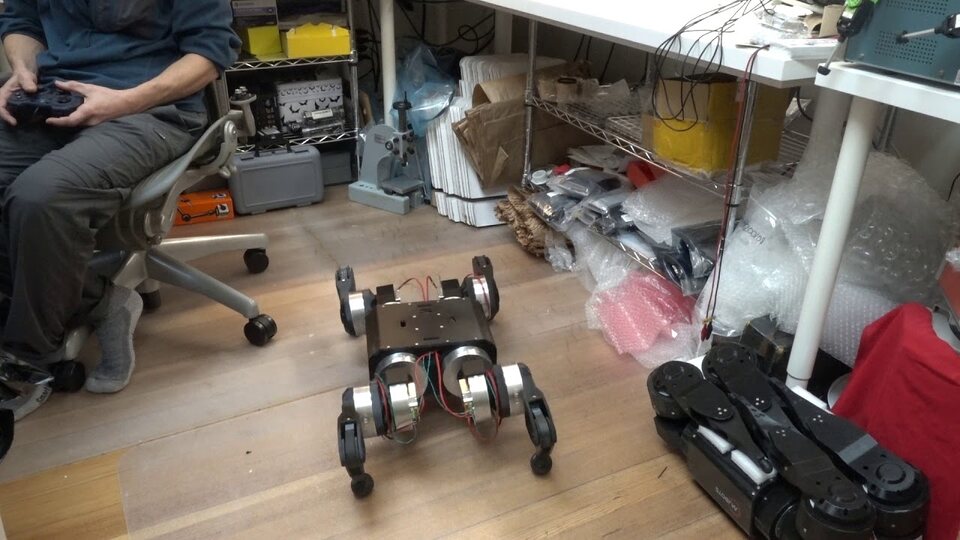
Watch on YouTube · Josh Pieper jump test (0:41)
Josh Pieper’s dynamic, jumping QDD brushless quadruped built from machined aluminum and carbon fiber around the fully open-source moteus STM32 CAN-FD brushless FOC servo controller family.
- Sources: mjbots/moteus (Apache-2.0, 1,400 stars, pushed Nov 25, 2026), mjbots/quad (108 stars, pushed Jun 17, 2026), and mjbots.com.
- Why it stands out: Even if you don’t clone the whole
quad A1,moteusis the gold-standard open-source FOC driver/actuator stack for building custom metal/carbon legged robots or CNC-machined QDD joints with real torque control and high-rate CAN-FD telemetry. - Tradeoffs: Deepest full-stack engineering climb on the board (C++/Bazel host stack, custom machined/carbon leg parts, high-power LiPo management) — better suited as an actuator foundation or long-arc flagship build after earlier tiers.